
Fleet & Vehicle Graphics for Denver Metro Businesses
Consistent branding across every vehicle you run, applied to the same spec every time.
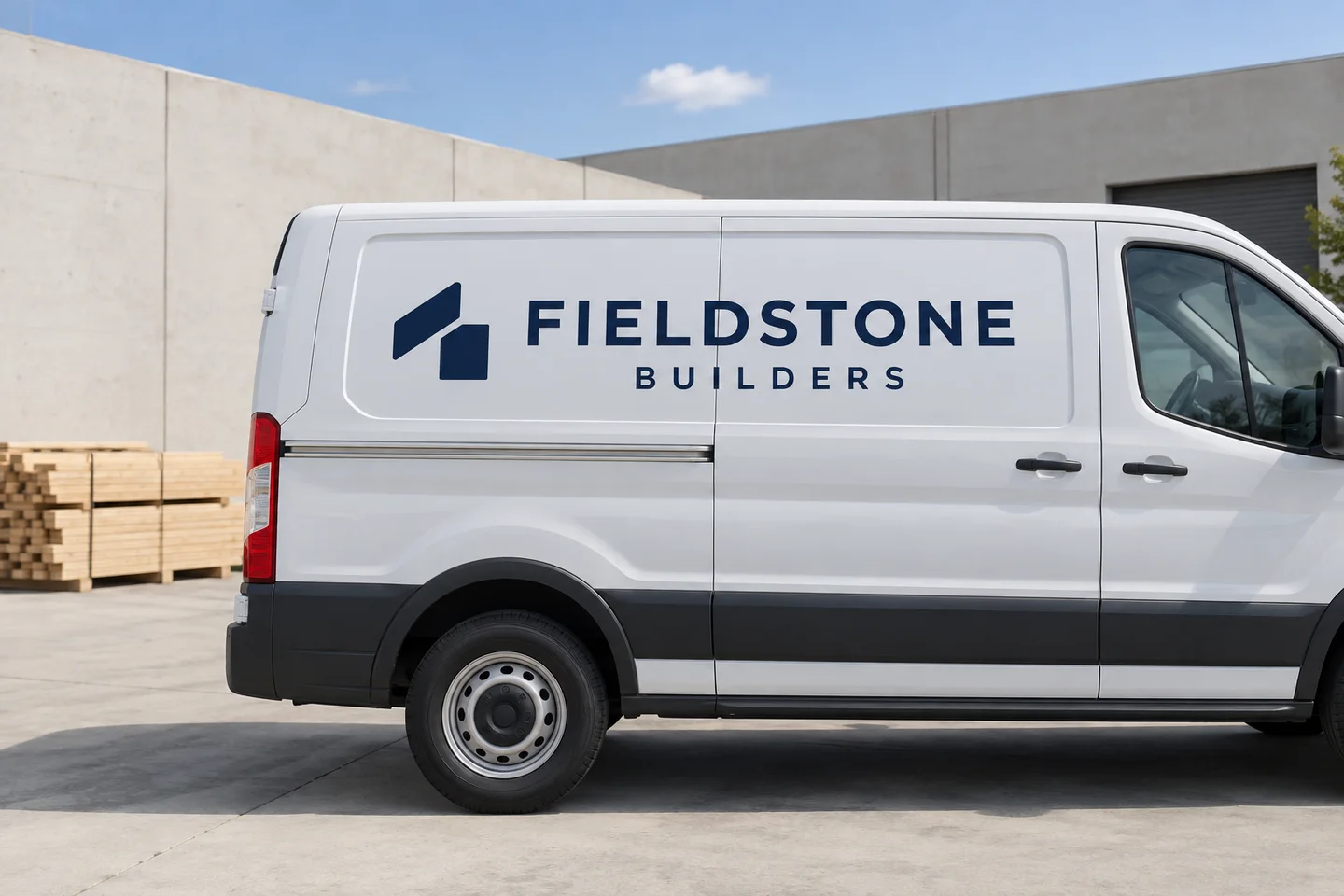
Fictional business · Not a completed Radiance project.
Fleet and vehicle graphics for Denver Metro businesses
Fleet graphics turn vehicles you’re already paying for into the cheapest advertising you will ever buy — provided every vehicle looks like it belongs to the same company. That’s the part most fleets get wrong: three vans done at three different times by three different shops, in three slightly different blues.
We work with contractors, trades, and service businesses running anything from two vans to a few dozen, multi-location operators who need one identity across every market, and companies mid-rebrand who need the whole fleet changed over inside a defined window.
The unit of work here isn’t the vehicle — it’s the template. We build a graphics specification per vehicle model in your fleet, and then apply it identically every time, including to vehicles you buy two years from now.
Options and configurations
- Full wraps — the entire vehicle covered in printed vinyl. Maximum impact, and it protects the paint underneath.
- Partial wraps — printed panels over the high-visibility areas with the base paint left exposed. Typically a large fraction of the visual impact for a fraction of the cost.
- Spot graphics and decals — cut vinyl logo, name, phone, and licence numbers. The cost-effective standard for white or already-branded vehicles.
- Cut vinyl lettering — durable, crisp, and the cheapest way to get a fleet consistent.
- Reflective graphics — for vehicles working roadside or after dark, and often required for certain classes of work.
- Window graphics — perforated one-way vinyl on rear glass, keeping outward visibility.
- Magnetic panels — removable, for leased vehicles or dual-use personal vehicles. Lower durability and they must come off periodically to avoid trapping moisture.
- Trailers and equipment — box trailers, enclosed trailers, and yard equipment on the same template.
- Regulatory copy — DOT numbers, licence numbers, and required markings placed to spec as part of the layout rather than added crookedly afterwards.
Project considerations
- Vehicle survey — make, model, and year determine the template. Body lines, door handles, cladding, rivets, and mouldings all affect where artwork can sit and how it will look.
- Paint condition — vinyl needs sound paint. It will not adhere reliably to oxidised, peeling, or recently repainted panels, and fresh paint needs curing time before wrapping.
- Design for motion — a vehicle is read for a few seconds from an adjacent lane. Company name, one service line, and a phone number or short URL. Everything else is decoration.
- Colorado UV and altitude — high-altitude UV is genuinely harder on vinyl than the same latitude at sea level. We specify cast vinyl with a laminate for anything expected to last, not calendared film.
- Winter and road salt — mag chloride and grit on Front Range roads attack edges and seams. Edge sealing and correct panel overlap matter.
- Downtime scheduling — every vehicle wrapped is a vehicle off the road. We schedule in batches around your operations, and can work weekends for fleets that can’t spare weekday capacity.
- Leased and financed vehicles — check your lease for wrap restrictions and end-of-term restoration requirements before you commit.
- Removal and resale — quality vinyl removes cleanly within its rated life. Left far beyond it, especially in this climate, removal gets slow and expensive.
The process
Consultation → vehicle survey and template creation → design and mockup on your actual vehicle model → approval → production → surface prep and installation → cure and inspection → rollout scheduling for the rest of the fleet → re-wrap or removal at resale
Once the template is approved, every subsequent vehicle is a repeat: same artwork, same placement, same materials. New vehicle joins the fleet in three years, it still matches.
What drives the cost
- Coverage — full wrap, partial wrap, or spot decals
- Vehicle size and complexity — a box truck’s flat panels are simpler than a van with heavy body contours and cladding
- Number of vehicles, and how many distinct models the fleet contains (each model needs its own template)
- Material grade — cast vinyl with laminate versus calendared film, and reflective options
- Design work, and whether print-ready brand assets already exist
- Removal of existing graphics, and any paint correction needed first
- Scheduling — after-hours and weekend work to keep vehicles in service
- Phasing across budget periods
Per-vehicle cost drops significantly after the first, because the template is the expensive part. A fleet done together costs meaningfully less per vehicle than the same vehicles done one at a time.
Where fleet graphics typically go
- Trades and home services — partial wraps on service vans, with the phone number sized to be read from the next lane at 40 mph.
- Construction and specialty contractors — spot graphics plus reflective markings on pickups and equipment trucks working roadside.
- Multi-location service businesses — one template rolled out market by market so every van reads as the same brand.
- Rebrands — the whole fleet changed over inside a defined window, phased by vehicle availability, so no vehicle is running the old identity after launch day.
Fleet graphics FAQs
How long do vehicle graphics last? Quality cast vinyl with a laminate is rated for years, and in Colorado UV that rating is worth paying for. Cheaper calendared film fades and shrinks noticeably faster at altitude. We specify to the life you actually want, and tell you honestly what a lower-cost option will and won’t do.
Full wrap or partial wrap? Partial wraps give you most of the visual impact for a lot less money and are the right answer for the majority of service fleets. Full wraps make sense when you want colour change, when the base paint is poor, or when maximum impact justifies the cost.
Will a wrap damage the paint? Properly specified vinyl on sound factory paint removes cleanly within its rated life, and the paint underneath is usually better preserved than exposed panels. Problems come from poor-quality film, resprayed or damaged paint, or leaving graphics on for years past their rating.
How long is my vehicle off the road? Typically a day or so per vehicle for a wrap, less for spot graphics — plus cure time. For a fleet we schedule in batches around your operations, and we can work weekends where downtime can’t happen midweek.
Can you match graphics on vehicles we bought later? Yes — that’s what the template is for. Once your specification is approved we hold it, so a vehicle added in two years gets identical artwork in identical positions.
What about DOT numbers and required markings? We lay them out to the required size and placement as part of the design, so they’re integrated rather than stuck on afterwards. You confirm the numbers; we place them correctly.
Do we need a permit? No. Vehicle graphics aren’t regulated by the sign code — one of the few sign types where the answer is genuinely that simple.
Next step
Tell us what’s in the fleet — make, model, and count — and send your logo. We’ll build the template and show you the design on your actual vehicle model before anything gets printed.
Request a fleet graphics consultation
Related: Vehicle wraps · Window graphics · Construction & development signage
Related graphics
Privacy & Frosted Film
Etched-glass looks and daylight-friendly privacy for conference rooms and glass fronts.
Vehicle Wraps
Turn one vehicle into a moving billboard with a wrap designed to be read at speed.
Wall Murals
Transform blank walls into branded, immersive environments that inspire.